
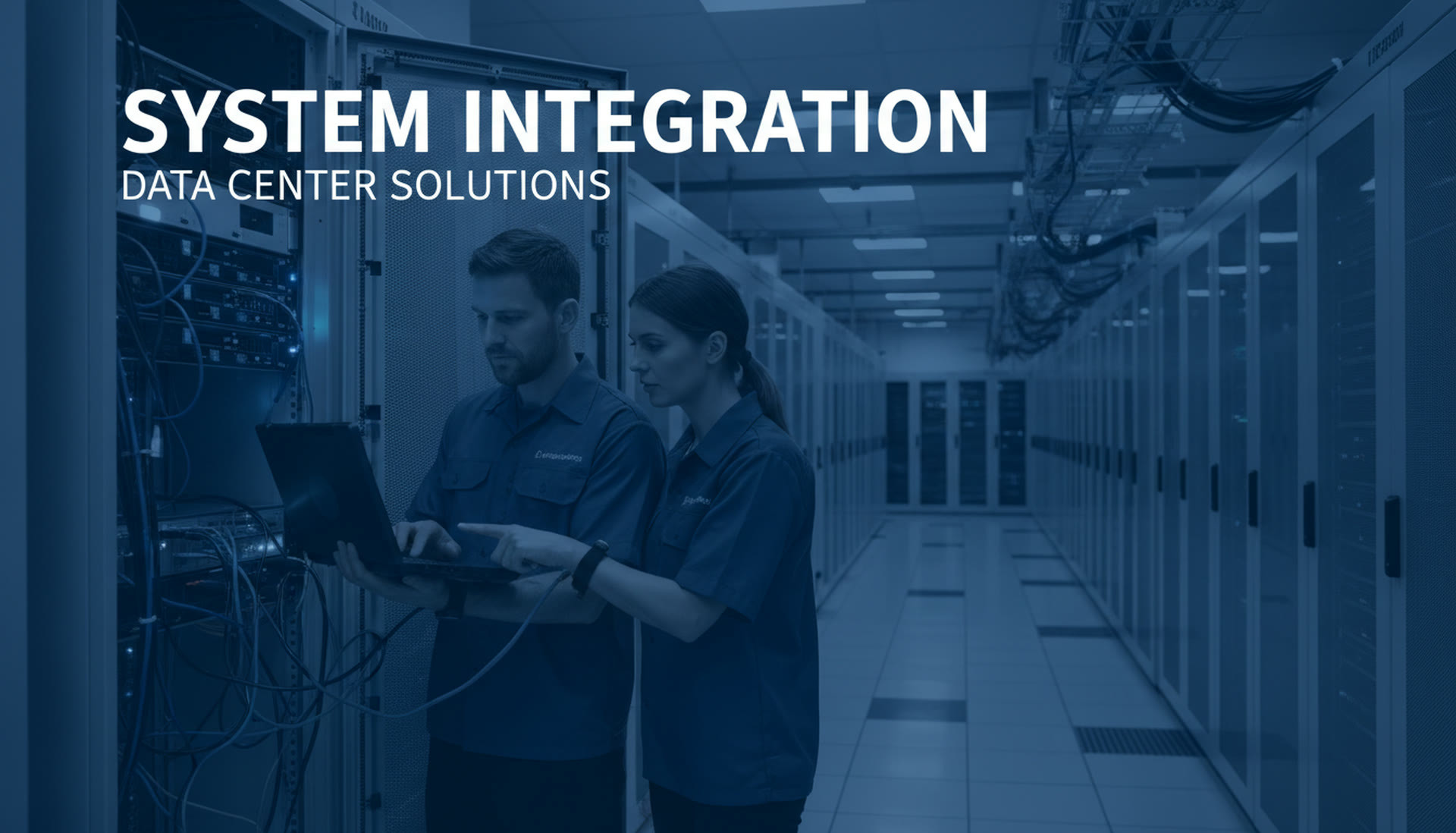
System Integration
Most organisations have systems — but those systems do not know each other. The same data is entered in three separate places and none of them agrees.
- MonitoringL5
- TransformationL4
- TransportL3
- OwnershipL2
- Source systemsL1
Bottom to top: from physical infrastructure to application. Each layer has its own delivery document.
System integration means bringing the different software and hardware systems in an organisation together into a single functioning whole. Mipo establishes the data flow between ERP, accounting, e-invoicing, production and field systems; and delivers alongside it the structure that monitors whether the integration is running and alerts on failure.
System integration from data to interface, layer by layer.
Infrastructure is not a single job — it is layers stacked on top of each other. An installation that skips a layer makes everything above it fragile.
Monitoring
Flow status dashboard, error logging and alerting
Transformation
Field mapping, code tables, format conversion
Transport
API, file or database bridge
Ownership
A single authoritative system for each data type
Source systems
ERP, accounting, production, field and e-invoicing systems

Before integration we see the existing systems on site.
Measurements are taken before installation. Capacity, coverage and downtime window are not determined by estimation.
System inventory
All systems in the organisation, their data owners and any existing manual transfers are mapped out.
Authoritative record decision
A single owning system is designated for each data type. This is the most critical decision in integration.
Volume and frequency
Daily record count and the required freshness (real-time, hourly) are measured.
Failure scenarios
What will happen when a transfer fails is defined in advance.
Which integration tools we connect systems with.
- Protocols
- REST · SOAP · file · direct database
- Systems
- ERP · accounting · e-invoicing · production · field
- Error handling
- Logging · retry · threshold alert
- Monitoring
- Flow status dashboard
- Freshness
- Real-time · periodic · batch — as required
- Delivery
- Source code · integration map · field mapping table
Typical project 4–12 weeks
When the integration is complete, what you hold.
Infrastructure without documentation is infrastructure dependent on whoever built it. The delivery file is prepared so another team can take over.
- Integration map (which system sends what to whom)
- Field mapping table
- Error handling and retry policy
- Monitoring dashboard access and alert rules
- Technical documentation and connector source code
Questions about system integration.
Generally yes. Without an API, a bridge is built via database-level reading, file-based transfer or a middleware layer. The method is determined by the safest option the system supports.
Yes. Failed transfers are logged, retried, and an alert is generated when a threshold is exceeded. Flow status is monitored from a single dashboard.
It can. Under the maintenance agreement, compatibility is checked before updates and connectors are updated as necessary.
This is the most critical decision in the integration. A single owner system is determined for each data type and documented in the architecture.
Existing structures can be reviewed and taken over. If the review concludes that rewriting is more appropriate, this is reported with justification.